Buy teacupfamily.eu ?
We are moving the project
teacupfamily.eu .
Are you interested in purchasing the domain
teacupfamily.eu ?
domain@kv-gmbh.de · 0541-91531010
Buy teacupfamily.eu ?
Which lemma can I use to prove the pumping lemma?
To prove the pumping lemma for regular languages, you can use the lemma itself. The pumping lemma states that for any regular language L, there exists a constant p (the pumping length) such that any string s in L with length at least p can be divided into three parts, s = xyz, satisfying certain conditions. By using the pumping lemma, you can show that for any regular language, there exists a pumping length p such that any string in the language can be pumped to generate an infinite number of strings also in the language. **
How to apply the Pumping Lemma?
To apply the Pumping Lemma, you first assume that a language L is regular. Then, you choose a suitable string w from L that satisfies the conditions of the Pumping Lemma. Next, you decompose w into three parts, u, v, and x, such that w = uvx and |v| > 0 and |uv| ≤ p, where p is the pumping length given by the Pumping Lemma. Finally, you show that for any i ≥ 0, the string uv^ix is not in L, thus leading to a contradiction and proving that L is not regular. **


Similar search terms for Lemma
Top-Angebote
Products related to Lemma:
-
Uplift Treasures Family Blessings Wooden Kitchen Wall Decor Family Blessings Wooden Kitchen Wall DecorProduct Description: Add warmth and heartfelt charm to your home with this family blessings wooden wall dcor. Designed for kitchens and dining areas, this rustic piece features meaningful quotes that create a cozy, welcoming atmosphereperfect for...73,97 $*Shipping: 0,00 $Secure redirect to the provider
-
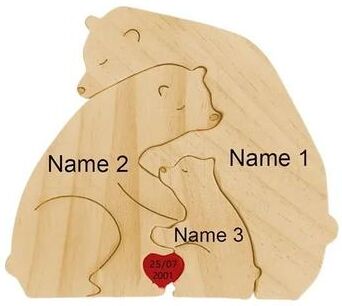
Uplift Essentials Custom Bear Family Wooden Puzzle Personalized Interlocking Name Ornament For Family Gifts & Modern Home Decor 4 Bears customized"Celebrate the unbreakable bond of family with our Custom Bear Family Wooden Puzzle Art. Featuring a highdefinition interlocking design, this sculptural piece is designed to bring a ""warmminimalist"" energy to your sanctuary. Whether you are styling a..."64,97 $*Shipping: 0,00 $Secure redirect to the provider
-
SAFAVIEH Lemma Window Polyester Home Accent, Modern Sofa or Bed Accent"Lemma Window Home Accent: sheer polyester fabric and grommet top header The Lemma Window Home Accent is a modern home accent. This polyester home accent measures 51"" W x 84"" L. Available in 2 colorways: Grey and Lavander."20,65 $*Shipping: 0,00 $Secure redirect to the provider
-
Uplift Essentials Custom Bear Family Wooden Puzzle Personalized Interlocking Name Ornament For Family Gifts & Modern Home Decor 6 Bears customized"Celebrate the unbreakable bond of family with our Custom Bear Family Wooden Puzzle Art. Featuring a highdefinition interlocking design, this sculptural piece is designed to bring a ""warmminimalist"" energy to your sanctuary. Whether you are styling a..."74,97 $*Shipping: 0,00 $Secure redirect to the provider



-
How do you apply the Pumping Lemma?
The Pumping Lemma is applied to prove that a language is not regular. To apply the Pumping Lemma, you assume that the language in question is regular and then choose a suitable string from the language. Next, you decompose the string into three parts as per the conditions of the Pumping Lemma. By selecting a specific pumping length, you show that no matter how the string is pumped, it will eventually generate a string that is not in the language, thus contradicting the assumption that the language is regular. **
-
What is the Pumping Lemma for regular languages?
The Pumping Lemma for regular languages is a fundamental result in theoretical computer science that provides a necessary condition for a language to be regular. It states that for any regular language L, there exists a constant p (the pumping length) such that any string s in L of length at least p can be split into three substrings, s = xyz, satisfying three conditions: 1) |xy| ≤ p, 2) |y| > 0, and 3) for all i ≥ 0, the string xy^iz is also in L. This lemma is often used to prove that certain languages are not regular by showing that they do not satisfy the conditions of the Pumping Lemma. **
-
What is the question about the Pumping Lemma?
The question about the Pumping Lemma typically asks students to use the lemma to prove that a given language is not regular. Students are usually asked to choose a specific string from the language, decompose it into three parts as per the lemma's requirements, and then show that no matter how the string is pumped, it will not remain in the language. This demonstrates that the language does not satisfy the conditions of the Pumping Lemma and therefore cannot be regular. **
-
What does the Pumping Lemma state for regular languages?
The Pumping Lemma for regular languages states that for any regular language L, there exists a pumping length p such that any string s in L with length at least p can be divided into three parts, u, v, and w, such that s = uvw, satisfying three conditions: 1) |uv| ≤ p, 2) |v| > 0, and 3) for all i ≥ 0, the string uv^iw is also in L. This lemma is used to prove that certain languages are not regular by showing that they do not satisfy the conditions of the Pumping Lemma. **

Why can't it be pumped with the pumping lemma?
The pumping lemma is a tool used to prove that a language is not regular. If a language cannot be pumped with the pumping lemma, it means that the language does not satisfy the conditions required for it to be regular. This could be due to the language having a non-regular structure or containing patterns that cannot be captured by a finite automaton. In other words, the language may have properties that cannot be replicated by the finite memory of a regular language. **
How does the pumping lemma for regular languages work?
The pumping lemma for regular languages states that for any regular language L, there exists a constant p such that any string s in L with length at least p can be divided into three parts, s = xyz, satisfying the following conditions: 1. |xy| ≤ p 2. |y| > 0 3. For all i ≥ 0, the string xy^iz is also in L. This lemma is used to prove that a language is not regular by assuming it is regular and then finding a string that violates the conditions of the pumping lemma. If no such string can be found, then the language may be regular. **
Top-Angebote
Products related to Lemma:
-
SAFAVIEH Lemma Window Polyester Home Accent, Modern Sofa or Bed Accent"Lemma Window Home Accent: sheer polyester fabric and grommet top header The Lemma Window Home Accent is a modern home accent. This polyester home accent measures 51"" W x 84"" L. Available in 2 colorways: Grey and Lavander."20,99 $*Shipping: 0,00 $Secure redirect to the provider
-
William Morris At Home Kitchen Garden Teacup & SaucerEnjoy the timeless elegance of the William Morris at Home Teacup & Saucer, designed to elevate your tea time. Crafted from durable stoneware, this set is perfect for adding a touch of sophistication to your afternoon tea. The beautiful design not only enhances your dining experience but also makes each cup of tea feel special. Ideal for both everyday use and special occasions, this teacup and saucer set is a delightful addition to any kitchen. Material: Stoneware. Dimensions: 8(H) x 15(W) x 15(L)cm. Weight: 0.61kg.18,00 £*Shipping: 3,50 £Secure redirect to the provider
-
Uplift Treasures Family Blessings Wooden Kitchen Wall Decor Family Blessings Wooden Kitchen Wall DecorProduct Description: Add warmth and heartfelt charm to your home with this family blessings wooden wall dcor. Designed for kitchens and dining areas, this rustic piece features meaningful quotes that create a cozy, welcoming atmosphereperfect for...73,97 $*Shipping: 0,00 $Secure redirect to the provider
-
Uplift Essentials Custom Bear Family Wooden Puzzle Personalized Interlocking Name Ornament For Family Gifts & Modern Home Decor 4 Bears customized"Celebrate the unbreakable bond of family with our Custom Bear Family Wooden Puzzle Art. Featuring a highdefinition interlocking design, this sculptural piece is designed to bring a ""warmminimalist"" energy to your sanctuary. Whether you are styling a..."64,97 $*Shipping: 0,00 $Secure redirect to the provider
-
Which lemma can I use to prove the pumping lemma?
To prove the pumping lemma for regular languages, you can use the lemma itself. The pumping lemma states that for any regular language L, there exists a constant p (the pumping length) such that any string s in L with length at least p can be divided into three parts, s = xyz, satisfying certain conditions. By using the pumping lemma, you can show that for any regular language, there exists a pumping length p such that any string in the language can be pumped to generate an infinite number of strings also in the language. **
-
How to apply the Pumping Lemma?
To apply the Pumping Lemma, you first assume that a language L is regular. Then, you choose a suitable string w from L that satisfies the conditions of the Pumping Lemma. Next, you decompose w into three parts, u, v, and x, such that w = uvx and |v| > 0 and |uv| ≤ p, where p is the pumping length given by the Pumping Lemma. Finally, you show that for any i ≥ 0, the string uv^ix is not in L, thus leading to a contradiction and proving that L is not regular. **
-
How do you apply the Pumping Lemma?
The Pumping Lemma is applied to prove that a language is not regular. To apply the Pumping Lemma, you assume that the language in question is regular and then choose a suitable string from the language. Next, you decompose the string into three parts as per the conditions of the Pumping Lemma. By selecting a specific pumping length, you show that no matter how the string is pumped, it will eventually generate a string that is not in the language, thus contradicting the assumption that the language is regular. **
-
What is the Pumping Lemma for regular languages?
The Pumping Lemma for regular languages is a fundamental result in theoretical computer science that provides a necessary condition for a language to be regular. It states that for any regular language L, there exists a constant p (the pumping length) such that any string s in L of length at least p can be split into three substrings, s = xyz, satisfying three conditions: 1) |xy| ≤ p, 2) |y| > 0, and 3) for all i ≥ 0, the string xy^iz is also in L. This lemma is often used to prove that certain languages are not regular by showing that they do not satisfy the conditions of the Pumping Lemma. **
Similar search terms for Lemma
-
SAFAVIEH Lemma Window Polyester Home Accent, Modern Sofa or Bed Accent"Lemma Window Home Accent: sheer polyester fabric and grommet top header The Lemma Window Home Accent is a modern home accent. This polyester home accent measures 51"" W x 84"" L. Available in 2 colorways: Grey and Lavander."20,65 $*Shipping: 0,00 $Secure redirect to the provider
-
Uplift Essentials Custom Bear Family Wooden Puzzle Personalized Interlocking Name Ornament For Family Gifts & Modern Home Decor 6 Bears customized"Celebrate the unbreakable bond of family with our Custom Bear Family Wooden Puzzle Art. Featuring a highdefinition interlocking design, this sculptural piece is designed to bring a ""warmminimalist"" energy to your sanctuary. Whether you are styling a..."74,97 $*Shipping: 0,00 $Secure redirect to the provider
-
Uplift Essentials Custom Bear Family Wooden Puzzle Personalized Interlocking Name Ornament For Family Gifts & Modern Home Decor 2 Bears customized"Celebrate the unbreakable bond of family with our Custom Bear Family Wooden Puzzle Art. Featuring a highdefinition interlocking design, this sculptural piece is designed to bring a ""warmminimalist"" energy to your sanctuary. Whether you are styling a..."54,97 $*Shipping: 0,00 $Secure redirect to the provider
-
Uplift Essentials Custom Bear Family Wooden Puzzle Personalized Interlocking Name Ornament For Family Gifts & Modern Home Decor 3 Bears customized"Celebrate the unbreakable bond of family with our Custom Bear Family Wooden Puzzle Art. Featuring a highdefinition interlocking design, this sculptural piece is designed to bring a ""warmminimalist"" energy to your sanctuary. Whether you are styling a..."59,97 $*Shipping: 0,00 $Secure redirect to the provider
-
What is the question about the Pumping Lemma?
The question about the Pumping Lemma typically asks students to use the lemma to prove that a given language is not regular. Students are usually asked to choose a specific string from the language, decompose it into three parts as per the lemma's requirements, and then show that no matter how the string is pumped, it will not remain in the language. This demonstrates that the language does not satisfy the conditions of the Pumping Lemma and therefore cannot be regular. **
-
What does the Pumping Lemma state for regular languages?
The Pumping Lemma for regular languages states that for any regular language L, there exists a pumping length p such that any string s in L with length at least p can be divided into three parts, u, v, and w, such that s = uvw, satisfying three conditions: 1) |uv| ≤ p, 2) |v| > 0, and 3) for all i ≥ 0, the string uv^iw is also in L. This lemma is used to prove that certain languages are not regular by showing that they do not satisfy the conditions of the Pumping Lemma. **
-
Why can't it be pumped with the pumping lemma?
The pumping lemma is a tool used to prove that a language is not regular. If a language cannot be pumped with the pumping lemma, it means that the language does not satisfy the conditions required for it to be regular. This could be due to the language having a non-regular structure or containing patterns that cannot be captured by a finite automaton. In other words, the language may have properties that cannot be replicated by the finite memory of a regular language. **
-
How does the pumping lemma for regular languages work?
The pumping lemma for regular languages states that for any regular language L, there exists a constant p such that any string s in L with length at least p can be divided into three parts, s = xyz, satisfying the following conditions: 1. |xy| ≤ p 2. |y| > 0 3. For all i ≥ 0, the string xy^iz is also in L. This lemma is used to prove that a language is not regular by assuming it is regular and then finding a string that violates the conditions of the pumping lemma. If no such string can be found, then the language may be regular. **
* All prices are inclusive of VAT and, if applicable, plus shipping costs. The offer information is based on the details provided by the respective shop and is updated through automated processes. Real-time updates do not occur, so deviations can occur in individual cases. ** Note: Parts of this content were created by AI.